Money, payments and staying connected in Morocco: a guide for UK travellers
UK Morocco editorial team · · 4 min read
Dirhams, cash machines, cards, tipping, roaming and local SIMs — how to handle money and data in Morocco without surprises.
Money and mobile data are two things that trip up first-time visitors, mostly because both work differently from the UK. This guide covers the essentials, with links to official information where rules apply.
The Moroccan dirham
Morocco's currency is the dirham (MAD). The UK government notes that it cannot easily be converted outside Morocco, so you will normally obtain dirhams after you arrive rather than at home. Visitors must also declare foreign currency worth 100,000 dirhams or more (roughly £8,000 at the time of writing) on entry or exit. Damaging or defacing banknotes is illegal, and passing counterfeit notes carries prison sentences — check any note you receive. See the FCDO entry requirements for the current rules.
Getting cash
- Cash machines (ATMs) are available in cities and larger towns, including at airports. Use machines attached to banks, in well-lit places, and cover the keypad. Your UK bank may charge a fee and its own exchange rate; check before you go.
- Exchange desks at airports and in towns offer another route. Compare the rate and any commission, and keep the receipt in case you want to change leftover dirhams back.
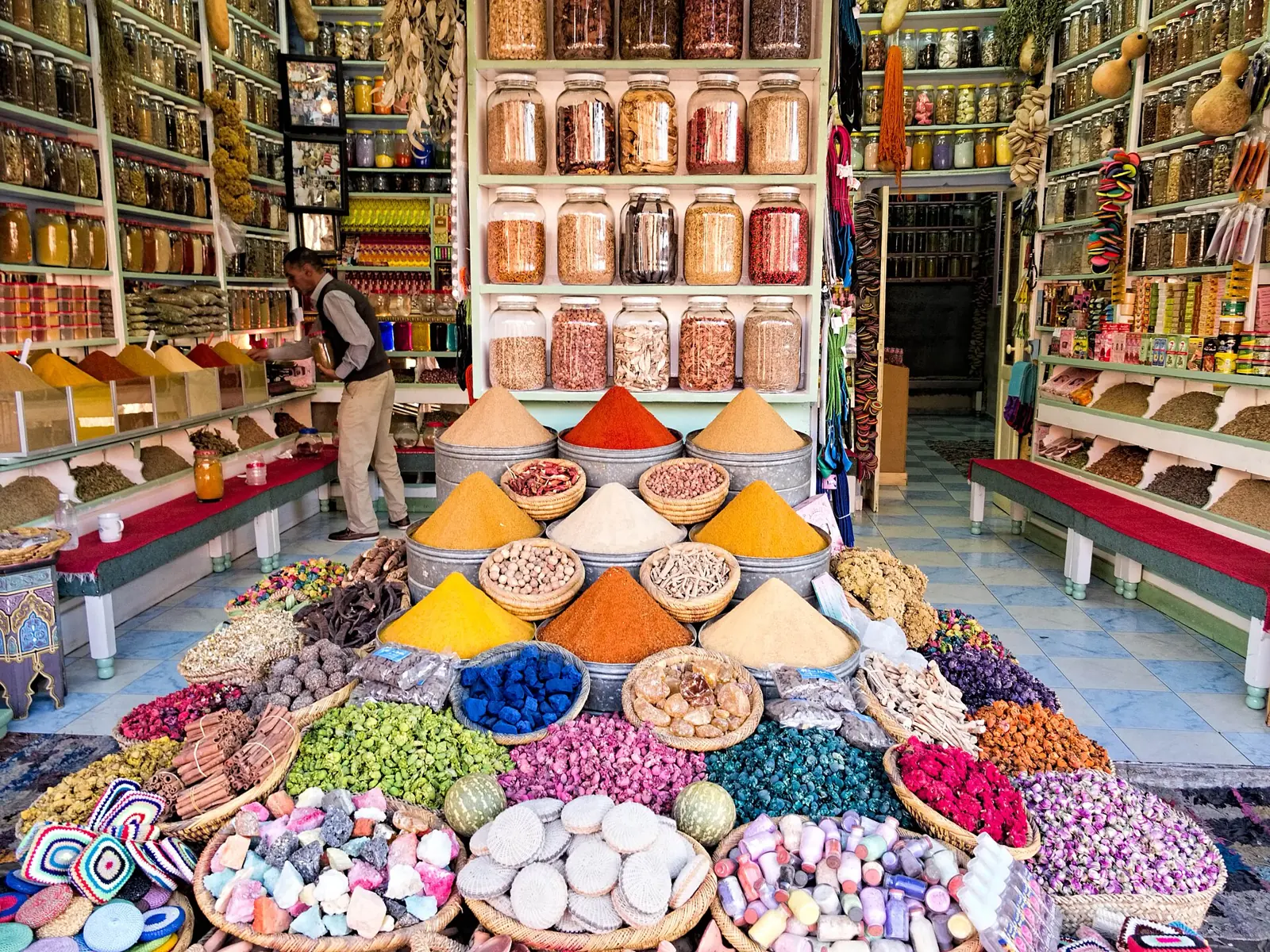
- Carry small notes and coins for taxis, tips and market purchases; large notes are hard to break.
Paying by card
Cards are accepted in many hotels, restaurants and larger shops, especially in Marrakech, Casablanca and Rabat. Cash is still the norm in souks, small cafés and taxis, and outside the main cities. The FCDO warns about credit-card fraud and merchants substituting inferior goods, so:
- Keep the card in sight when it is used, and check the receipt.
- If a terminal offers to charge you in pounds, choosing dirhams usually gives a better rate than the merchant's conversion.
- Take more than one card and tell your bank you are travelling if it asks you to.
Prices, bargaining and tipping
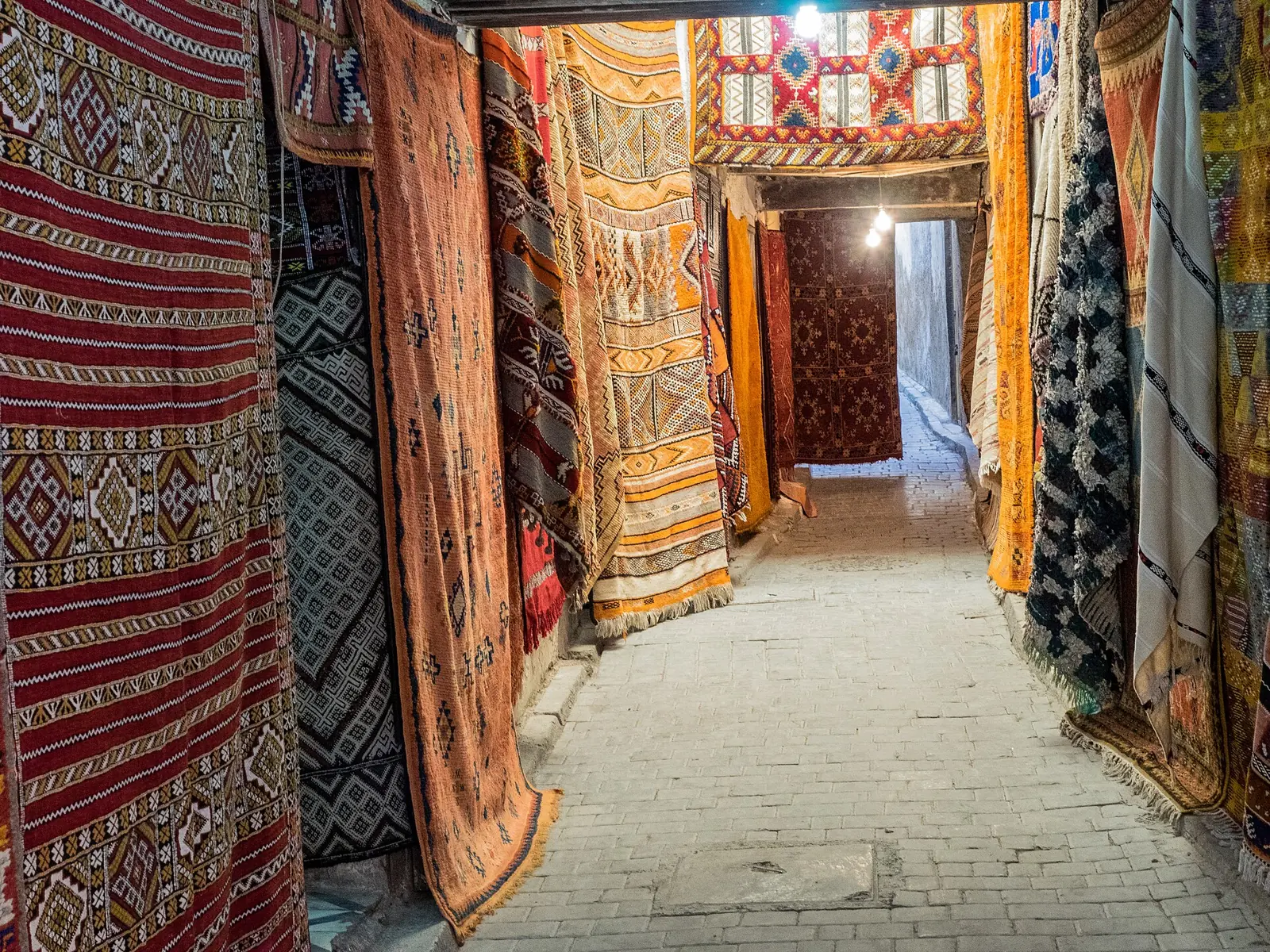
In souks, prices are negotiable: decide what you would pay, stay polite and be ready to walk away. Restaurant, hotel and taxi prices are normally more fixed; ask for the taxi meter or agree the fare first. Tipping is customary for guides, drivers, hotel staff and in restaurants, and small amounts are appreciated. Our budget estimates do not include tips — see how to budget for Morocco.
Staying connected
- Roaming. Morocco is outside the EU, and UK mobile providers commonly charge extra to use data and calls there. Check your provider's Morocco tariff, day passes or bolt-ons before you go, and switch off data roaming if you do not want charges.
- Local SIM. Morocco's main mobile networks are Maroc Telecom, Orange and inwi. Buy a SIM from an official shop; you will usually need to show your passport. Your phone must be unlocked.
- eSIM. If your phone supports it, a travel eSIM can be installed before departure. Compare data allowance, validity and price.
- Wi-Fi. Most riads, hotels and many cafés offer Wi-Fi, but speed varies, particularly in old medinas, the mountains and the desert.
- Messaging. WhatsApp is widely used in Morocco to contact hosts, drivers and guides.
Download offline maps and your booking confirmations before you leave for the desert or the mountains, where signal can drop out.
Insurance and safety with money
Split cash and cards between bags, use your accommodation's safe, and keep a photo of your passport separate from the original. The FCDO warns about pickpocketing and bag-snatching in busy medinas. For health, driving and other safety guidance, see the Morocco travel guide for UK visitors.
Sources
- FCDO: Morocco entry requirements (currency rules)
- FCDO: Morocco safety and security (fraud, theft)
Exchange rates, bank fees and mobile tariffs change. Check current terms with your bank and provider before travelling.