Morocco by train: routes, practical tips and how to plan
UK Morocco editorial team · · 4 min read
Morocco’s rail network is comfortable and good value on the main north–south line — and absent from the places many visitors most want to see. Here is what it covers and how to use it.
Trains are one of the most pleasant ways to cover long distances in Morocco: air-conditioned, reasonably priced and free of the stress of road traffic. But the network is not a complete solution. It serves the big cities of the north and centre very well and leaves out several places on many visitors' lists. This guide explains what the trains do, where they do not go, and how to combine them with buses and private transfers.
What the network covers
- Al Boraq high-speed line. Operated by ONCF, Morocco's national rail company, it links Tangier with Casablanca via Kenitra and Rabat. Journey times are around 2 hours 10 minutes from Tangier to Casablanca and about 1 hour 20 minutes from Tangier to Rabat (source: seat61 and rail-project information; check the current timetable).
- Main conventional lines. From Casablanca, Rabat and Kenitra, regular trains run to Marrakech to the south and to Fez and Meknes to the east.
- Airport link. There is a rail link between Casablanca's Mohammed V airport and the city, useful if you land in Casablanca.
Indicative journey times
These come from our planning data and are rounded; real timetables vary by service, so check ONCF before you plan around a specific train.
- Casablanca → Marrakech: roughly three hours or a little more
- Casablanca → Fez: about three and a half hours
- Rabat → Fez: about two and a half hours
- Fez → Tangier: about four and a half hours
- Marrakech → Rabat: about four hours
- Fez → Marrakech: seven hours or more; check whether your service needs a change
Our planning estimates put the main rail legs at roughly £8 to £25 per person at the Essential level and somewhat more at Comfort — indicative only, not fares.
Where trains do not go
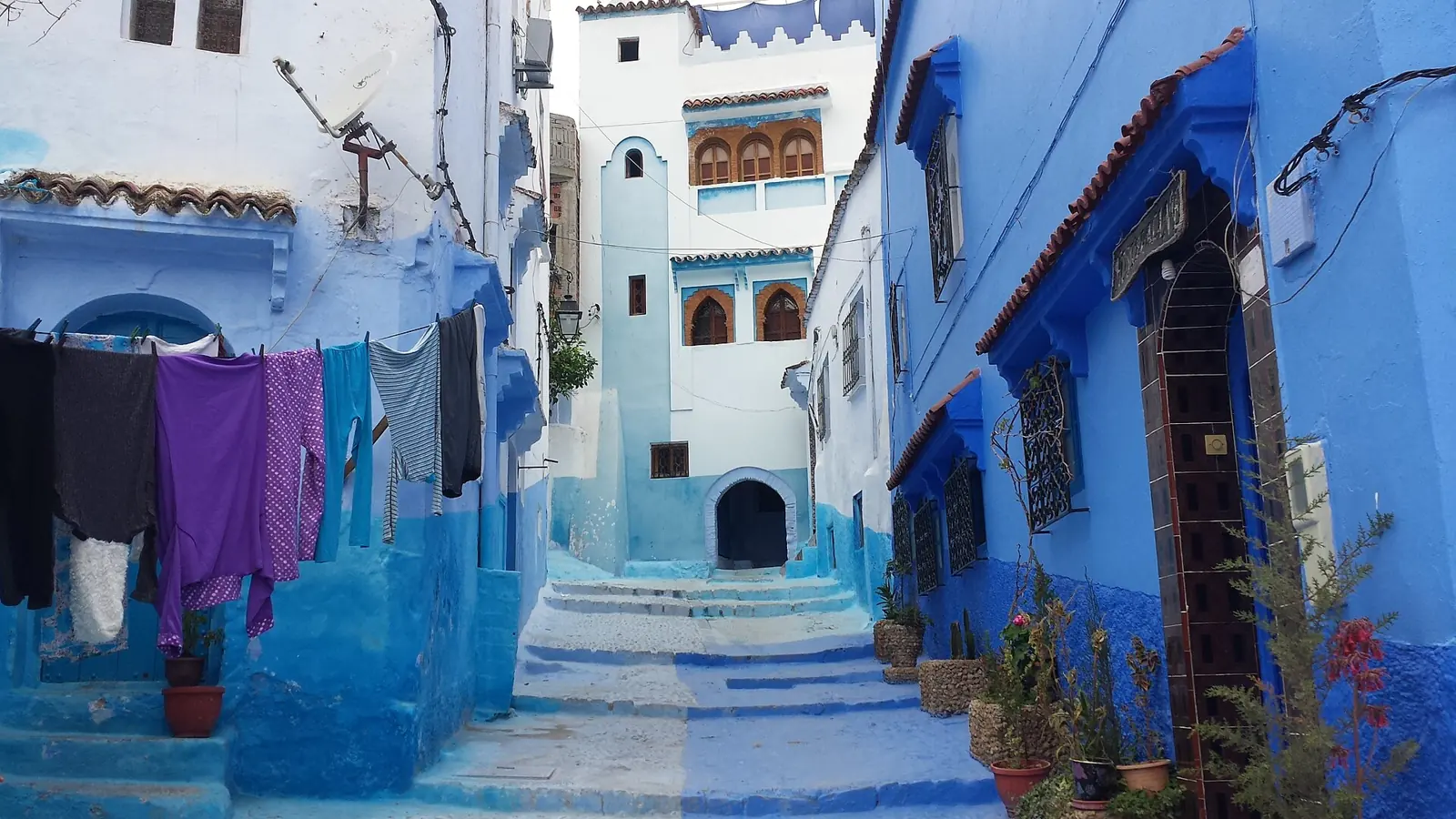
There is no rail service to Chefchaouen, Essaouira or the Sahara dunes at Merzouga. To reach them you need a bus or private transfer:
- Marrakech → Essaouira is about three hours by road; scheduled coach services run, and private transfers are common.
- Fez → Chefchaouen is around four hours by road; Marrakech → the Sahara is a very long day of about nine and a half hours, which is why many travellers break the journey or fly for part of a route.
National coach companies such as CTM, and Supratours (linked to ONCF), operate long-distance buses. Compare options and check baggage rules. See our 10-day itinerary for how the long road legs fit into a route.
Classes, seats and tickets
- Trains have first and second class. Al Boraq and other long-distance branded services issue reserved seats, so popular departures can sell out — book ahead for busy days and holidays.
- You can buy tickets at the station, where cards are increasingly accepted alongside cash, and online. Online booking with ONCF opens about three months ahead but can be awkward with some non-Moroccan payment cards; some travellers use third-party booking sites that accept foreign cards (compare fees).
- Arrive early, especially in Casablanca where you should check whether your train uses Casa Voyageurs or Casa Port.
- Keep luggage where you can see it and use the racks at the end of the carriage.
When to choose the train, and when not to
- Choose the train for Tangier–Rabat–Casablanca, Casablanca–Marrakech and the routes to Fez and Meknes.
- Choose a private driver or bus for Essaouira, Chefchaouen, the Atlas and the Sahara, or when you want door-to-door service with luggage.
- Consider flying for a very long leg, such as the far south, if your itinerary is short.
Plan it with the numbers
Every extra stop adds a transfer. Our trip planner uses realistic transfer times and prices when it builds a route, and shows the transport share of your budget — see how to budget for Morocco. The Morocco travel guide for UK visitors covers the practical basics.
Sources
- Seat61: Train travel in Morocco
- ONCF: national rail operator (timetables and tickets)
- Transfer times and cost estimates: UK Morocco planning data (2026.09), indicative only.
Timetables, fares and services change; always confirm with ONCF or the operator before you travel.