Morocco travel budget: accommodation, food, transport and activities
UK Morocco editorial team · · 4 min read
How to think about the cost of a Morocco trip — what drives it, sample totals for two travellers, and what our estimates do and do not include.
How much does a trip to Morocco cost? It depends far more on how you travel than on where you go: a simple guesthouse and local buses sit at one end, private drivers and five-star riads at the other. This guide explains the four building blocks of a budget and shows sample totals from our own planner. Every number below is an indicative estimate from our own research — not a quote, live price or availability. We confirm real prices before anything is booked.
What our estimates include — and what they don't
Estimates cover accommodation, food, local and intercity transport, airport transfers and activities in Morocco, in pounds. They do not include international flights, travel insurance, tips or personal shopping. Add those to your own budget separately.
The three travel styles we use
- Essential — simple, well-located stays; local transport and shared options; casual eating.
- Comfort — boutique riads and hotels; private transfers for longer journeys; a mix of restaurants.
- Luxury — top-end stays, private drivers and guides, fine dining.
1. Accommodation
This is usually the biggest line. Our planning data prices a room per night (two travellers share a room), and it varies by city. For example, Marrakech is about £40 / £110 / £320 per room per night at Essential / Comfort / Luxury, Fez about £35 / £90 / £250, Essaouira about £35 / £85 / £200 and Chefchaouen about £30 / £70 / £150. Prices swing with the season, school holidays and event dates, so treat these as a guide to relative cost.
2. Food
We assume about £18 / £35 / £75 per person per day for meals at Essential / Comfort / Luxury. Simple local cafés and street food are inexpensive; hotel restaurants and fine dining are not. A cooking class or street-food walk is an activity on top of meals.
3. Transport
Local transport (taxis in cities) is estimated at about £4 / £10 / £28 per person per day. Longer transfers are priced per person by route and style. For example, Marrakech to Essaouira is about three hours by road, and Marrakech to the Sahara is around nine and a half hours — one of the longest and costliest transfers in the country. Trains between the main northern and central cities are good value; see Morocco by train. Each extra stop adds a transfer, which is why fewer stops usually means a lower budget and a more relaxed trip.
4. Activities and guides
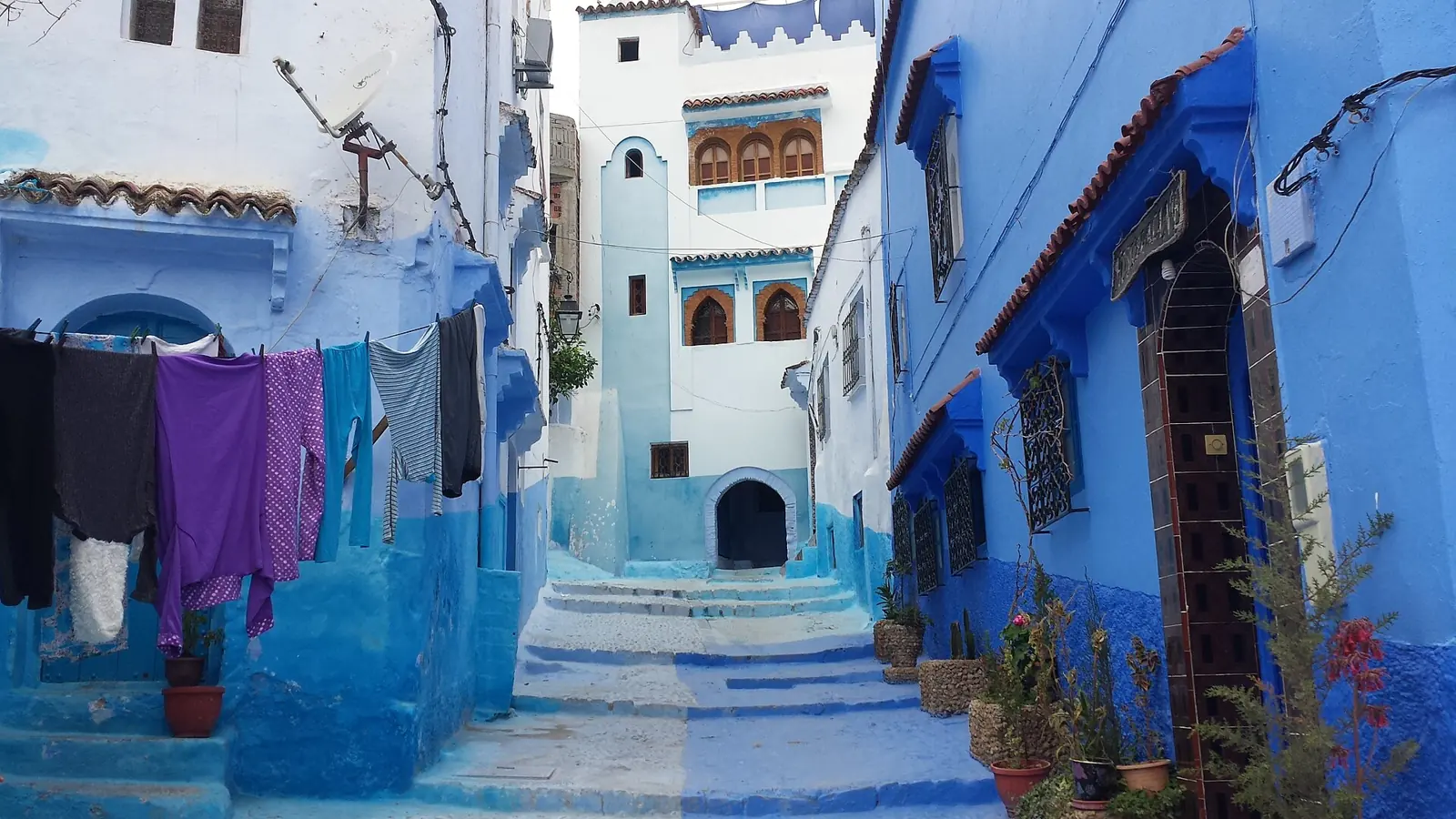
Many of the best experiences are inexpensive or free — walking the ramparts at Essaouira, sunset on the dunes, the blue lanes of Chefchaouen. Paid activities vary a lot. Examples from our planning data, per person at Essential / Comfort / Luxury: a guided souk walk in Marrakech £10 / £25 / £60; Fes el-Bali with a licensed guide £12 / £30 / £70; a hammam £8 / £35 / £90. A sunrise hot-air balloon starts around £150.
Sample totals for two travellers
Excluding flights, insurance, tips and shopping, at a balanced pace:
- 7 nights, Marrakech (4) and Essaouira (3): about £865 at Essential, £1,887 at Comfort and £4,420 at Luxury in total for two. See the 7-day itinerary.
- 10 nights, Marrakech, Sahara, Fez and Chefchaouen: about £1,231, £2,800 and £6,311. Transport is a much larger share on this route. See the 10-day itinerary.
- 5 nights in Marrakech only: about £1,042, £1,900 and £4,286. See the Marrakech guide.
These figures come from the same engine as our trip planner, so you can change the dates, number of travellers and style and see the result immediately.
Ways to keep the cost down
- Choose fewer bases and longer stays.
- Travel in spring or autumn outside school holidays — see the best time to visit.
- Use trains where they go, and agree taxi fares or use the meter.
- Mix paid highlights with the many free experiences.
- Book a licensed guide through your accommodation; it can be cheaper than a stressful bargaining session and avoids unofficial guides, a risk the FCDO highlights.
Currency reminder
Our figures are in pounds so you can plan in familiar terms. In Morocco you pay in dirhams, and exchange rates move, so treat any conversion as approximate. See money, payments and connectivity.
Sources
- UK Morocco planning data (2026.09) and planner quotes generated on 29 September 2026 — indicative only.
- FCDO: Morocco safety and security (unofficial guides)